
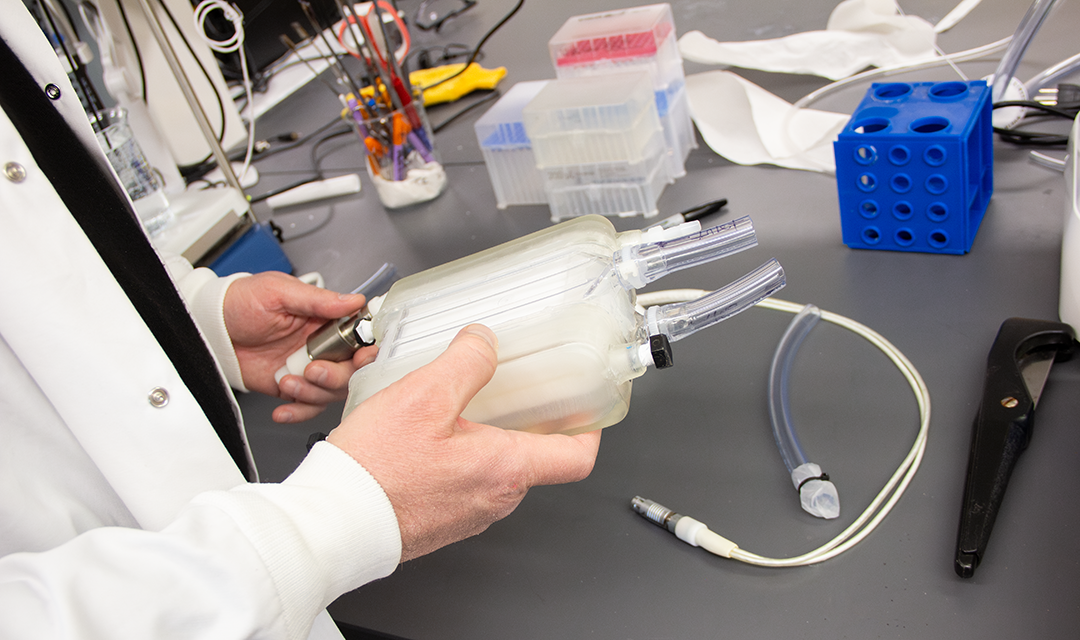
Transforming Transplant: An organ transplant innovation collaboration
Organ transplantation is one of the greatest achievements in the history of medicine. Over the last three decades, enormous progress has been made in improving transplant outcomes, with excellent short- and long-term clinical results that can reduce morbidity and mortality and improve quality of life for patients with organ failure. Yet a major challenge remains: there are not enough donated organs available to meet the needs of patients with chronic organ failure.
To address this growing need, Carnegie Mellon University and Mayo Clinic are collaborating to accelerate the translation of biomedical discovery to clinical practice. Pioneering faculty from both institutions are developing biomedical engineering solutions to address shortcomings in today’s organ transplant practice and ultimately turn validated science into clinical options for patients with organ dysfunction or failure who are in critical need of transplantation.
Advancing organ transplantation through biomedical engineering
The collaboration focuses on four key goals:
- Engineer new organs using stem cells, bioprinting, and tissue scaffolding technologies.
- Restore the function of donated organs that are currently considered unusable.
- Delay or prevent chronic graft failure in patients who have previously received organ transplants.
- Diagnose organ dysfunction earlier in the disease process and develop therapeutic interventions to prevent end-stage organ failure.
Why CMU and Mayo Clinic?
The collaboration brings together complementary strengths in transplantation, regenerative medicine, biomedical engineering, and technology development.
Mayo Clinic
Mayo Clinic’s nationally recognized organ transplant programs have provided patient care for more than 50 years. Across its three major campuses in Florida, Minnesota, and Arizona, Mayo Clinic is currently the largest organ transplant provider in the United States.
Each campus also has established regenerative medicine programs with advanced infrastructure in biomanufacturing and broad expertise in regenerative medicine products, including induced pluripotent stem cells (iPSCs). This creates a unique environment for collaboration between transplant clinicians and regenerative medicine scientists, helping scientific discoveries move efficiently toward patient-centered transplant practice.
CMU Biomedical Engineering
CMU Biomedical Engineering has established strengths in tissue engineering, including 3D biofabrication and bioprinting; extracellular vesicle engineering; computational organ modeling and design; extracellular matrix biology and engineering; biomaterials; stem cell engineering; cellular biomechanics; and translational organ testing.
Leveraging this expertise, CMU is using the classroom and laboratory to develop the future workforce needed to innovate, commercialize, and manufacture new organ designs and fabrication methods.